

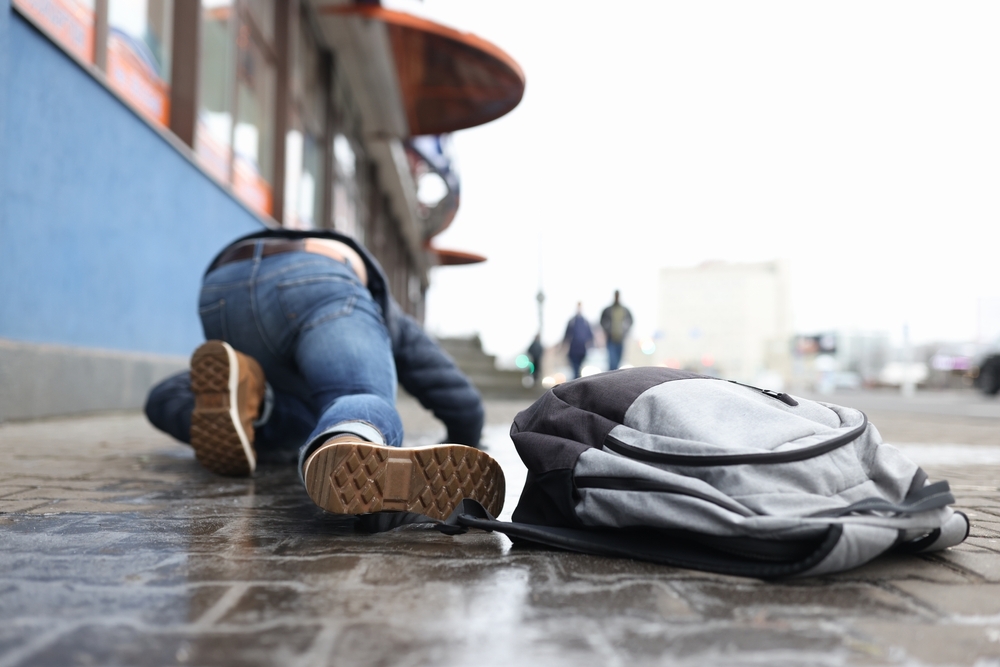
Winter in the Delaware Valley brings a specific kind of beauty along with a significant set of hazards. As the temperature drops in Mercer County and across New Jersey, the accumulation of snow and ice creates a treacherous landscape for pedestrians. Among these winter dangers, black ice is perhaps the most insidious. It is nearly invisible, often appearing as nothing more than a wet patch on the pavement, yet it possesses the power to cause life altering injuries in a split second.
If you have recently suffered a fall on an icy sidewalk, in a parking lot, or at a place of business, you are likely dealing with more than just physical pain. You are likely facing a mountain of medical bills, lost wages from time away from work, and the overwhelming confusion of New Jersey premises liability law. At Cohen & Riechelson, we understand that a slip and fall is not just a minor accident. It is a crisis that affects your health, your finances, and your family.
Our firm has served the local community for over 50 years. We have seen firsthand how a single patch of ice can change a life forever. Our goal with this guide is to provide clarity during this difficult time. We will walk you through the legal standards for ice and snow liability in New Jersey, the critical steps you must take to protect your rights, and how our experienced Mercer County NJ ice and snow slip and fall injury lawyers can help you secure the compensation you deserve.
The Invisible Threat of Black Ice
Black ice forms when a light layer of water freezes on the surface of a road or sidewalk. Because it is transparent, it allows the black pavement underneath to show through, making it look like the ground is simply wet. This deceptive appearance is what makes it so dangerous. Pedestrians often fail to adjust their gait or speed because they do not realize they are stepping onto a sheet of glass.
When you fall on black ice, the impact is often severe. Unlike a trip where you might be able to catch yourself, a slip on ice typically causes your feet to fly out from under you. This leads to high impact landings on your back, hips, or the back of your head. We frequently represent clients who have sustained traumatic brain injuries, spinal cord damage, fractured hips, and complex wrist breaks due to these falls.
From a legal perspective, the invisibility of black ice plays a major role in your case. A property owner might argue they did not know the ice was there. Nevertheless, New Jersey law requires property owners to be proactive. If the weather conditions were such that ice was likely to form, a reasonable owner should have taken steps to salt or sand the area. Our job is to prove that the hazard was foreseeable and that the owner failed to meet their legal duty of care.
Understanding New Jersey Premises Liability Standards
In New Jersey, the rules governing who is responsible for a fall on ice depend heavily on the type of property where the accident occurred. The law distinguishes between commercial and residential properties, and the obligations for each are quite different. As Mercer County NJ premises liability attorneys, we carefully analyze the nature of the property to determine the specific duty of care owed to you.
Commercial Property Liability
Commercial property owners, such as grocery stores, shopping malls, office complexes, and apartment buildings, owe the highest duty of care to those who enter their premises. They are legally required to maintain their property in a reasonably safe condition for customers and visitors. This includes a proactive obligation to remove snow and ice from sidewalks, entryways, and parking lots.
New Jersey courts have established that business owners cannot simply wait for the ice to melt. They must monitor weather conditions and take reasonable steps to prevent injuries. If a store owner knows that a thaw and refreeze cycle is occurring, they must apply salt to prevent patches of black ice from forming overnight. Failure to do so may result in the owner being held liable for the resulting injuries.
The Ongoing Storm Rule
One of the most significant legal developments in recent years is the adoption of the Ongoing Storm Rule by the New Jersey Supreme Court. This rule states that commercial landowners generally do not have a duty to remove snow and ice while a storm is still in progress. The logic is that it would be impractical and often impossible to keep a sidewalk completely clear while snow is still falling.
Even so, this rule is not absolute. There are two major exceptions that we look for when investigating a case. First, if the owner’s actions actually made the condition worse, such as by plowing snow into a pedestrian path, they may still be liable. Second, if the ice was left over from a previous storm that had already ended, the ongoing storm rule does not protect them. We use weather forensics and expert testimony to determine exactly when the precipitation stopped and whether the owner had a reasonable window to clear the hazard.
Residential Property Liability
The rules for residential property owners are generally more lenient. Historically, New Jersey law has held that private homeowners are not liable for injuries caused by natural accumulations of snow and ice on public sidewalks abutting their property. The responsibility for those sidewalks typically rests with the municipality.
Yet, there is a major catch. If a homeowner attempts to clear the snow and does so negligently, they can be held responsible. For example, if a neighbor shovels their walk but leaves a pile of snow in a way that causes water to run across the sidewalk and freeze into a sheet of ice, they have created a man-made hazard. In these instances, the homeowner may be liable for your fall.
NJ Unsafe Conditions Lawyer’s Role Proving Negligence
To succeed in a slip and fall claim, you must demonstrate more than just the fact that you fell. You must prove that an unsafe condition existed and that the property owner was negligent in addressing it. This is where the skill of a New Jersey unsafe conditions lawyer becomes essential. We focus on establishing four key elements: duty, breach, causation, and damages.
First, we establish that the property owner had a duty to maintain a safe environment. Second, we show that the owner breached that duty by failing to salt, sand, or clear the ice in a timely manner. Third, we prove that this specific failure was the direct cause of your fall. Finally, we document the full extent of your damages, including medical expenses and lost wages.
Property owners often claim they had no notice of the ice. We counter this by looking for constructive notice. This means the ice was present for such a long time that the owner should have discovered it if they were performing reasonable inspections. In Mercer County, local ordinances often set specific timeframes for snow removal, which we use as a benchmark for what constitutes a reasonable response time.
The Mercer County Crisis Checklist: 5 Immediate Steps
If you have just fallen, your first priority is your health. Once you are in a safe position, you must begin the process of documenting the scene. Evidence in ice cases is incredibly fleeting. A few hours of sunlight or a passing salt truck can erase the proof of negligence forever. We recommend following these steps immediately.
1. Take Photographs and Video
Use your smartphone to capture the exact spot where you fell. Take close up photos of the ice and wide angle shots of the entire area. Be sure to document the lack of salt or sand. If there is a leaking gutter or a nearby pile of snow that contributed to the ice formation, photograph that as well.
2. Identify Witnesses
If anyone saw you fall or helped you up, ask for their name and phone number. Witness testimony is often the deciding factor in a dispute with an insurance company. A neutral third party who can testify that the sidewalk was a skating rink provides invaluable support for your claim.
3. Report the Incident
If you fell at a business, notify the manager immediately. Ensure they create an official incident report and ask for a copy. Do not sign anything that admits fault or downplays your injuries. If you fell on a public sidewalk, you may need to notify the local police or public works department.
4. Seek Medical Attention
Even if you believe your injuries are minor, see a doctor right away. Adrenaline can mask the pain of serious internal injuries or fractures. Furthermore, insurance companies will look for any gap in treatment to argue that you were not actually hurt in the fall.
5. Be Mindful of the 90 Day Rule for Government Claims
If your fall occurred on property owned by a government entity, such as a public park, a school, or a municipal building, the New Jersey Tort Claims Act applies. This law requires you to file a formal Notice of Claim within 90 days of the accident. Missing this deadline will likely bar you from ever seeking compensation.
How Comparative Negligence Affects Your Claim
New Jersey follows a modified comparative negligence standard. This means that even if you were partially at fault for your fall, you may still be able to recover compensation. The court or an insurance adjuster will assign a percentage of fault to both you and the property owner.
For example, if you were wearing smooth soled shoes or were distracted when you stepped on the ice, you might be found 20% at fault. If your total damages are $100,000, your award would be reduced by 20% to $80,000. That said, if you are found to be more than 50% at fault, you cannot recover anything at all.
Insurance companies are experts at shifting the blame onto the victim. They will ask leading questions about your footwear or your familiarity with the area. We know these tactics well. We work tirelessly to minimize the percentage of fault assigned to our clients by focusing on the property owner's failure to provide a safe environment.
The Financial Reality of a Slip and Fall
A serious fall on ice often results in more than just physical suffering. The financial burden can be staggering. We understand that our clients are often worried about how they will pay for their mortgage or provide for their children while they are unable to work.
Medical expenses are often the largest component of a claim. This includes emergency room visits, surgeries, and physical therapy. We also seek compensation for lost wages and any loss of future earning capacity if your injuries are permanent. In addition to these economic damages, we pursue non economic damages for pain and suffering. While these damages are harder to quantify, they are a vital part of making you whole again.
Why Experience Matters in Ice and Snow Cases
Proving liability in a slip and fall case involving ice is significantly more complex than a standard trip and fall. It requires a deep understanding of local ordinances, weather patterns, and shifting legal doctrines. At Cohen & Riechelson, we bring over five decades of experience to every case we handle.
We conduct thorough investigations. We pull historical weather data to prove that the property owner had ample notice of the freezing conditions. We work with engineering experts who can testify about improper drainage systems that lead to ice patches. Whether you were injured in Hamilton, Trenton, Princeton, or any of the surrounding townships, we are familiar with the local courts and the specific snow removal ordinances that apply to your case.
Contact Cohen & Riechelson Today for a Consultation About Your Case
Do not let a negligent property owner leave you to suffer the consequences of their inaction. The bills for your medical care and the stress of your lost income should not be your burden alone. If you have been injured due to black ice or uncleared snow, you need a legal team that is ready to fight for your rights and hold the responsible parties accountable.
We offer a free, no obligation consultation to discuss the specifics of your accident and help you understand your legal options. We work on a contingency fee basis, which means you pay nothing unless we win your case. Our attorneys are ready to investigate the scene, handle the insurance adjusters, and build a powerful case on your behalf. We serve clients throughout Mercer County and the surrounding areas of New Jersey and Pennsylvania.
Time is of the essence in these matters. Evidence disappears and deadlines approach quickly. Reach out to us today to schedule your consultation and take the first step toward securing your future. We are here to guide you through every step of the legal process with compassion, professionalism, and the aggressive advocacy you deserve.
Call us at 609-528-2596 or visit our website to fill out a contact form. Let our experience be your advantage.
Disclaimer: The articles on this blog are for informative purposes only and are no substitute for legal advice or an attorney-client relationship. If you are seeking legal advice, please contact our law firm directly.